Today I learned about batteries, their different types, how to check a battery, and how batteries are used in an inverter system. I also worked on a domestic-level inverter connection. Along with this, I checked the moringa leaves that were kept in the solar dryer yesterday.
1. Learning About Batteries
First, I learned about different types of batteries available in the market. Batteries are used to store electrical energy and provide power when required. I saw different batteries with different sizes, capacities and prices. Some common types are lead-acid batteries, lithium-ion batteries and tubular batteries. The price of a battery depends on its voltage, capacity, brand and type.
I also learned how to check a battery. First, we should check the battery’s physical condition and terminals. We can use a digital multimeter to check the voltage. The multimeter is connected across the positive and negative terminals of the battery. We should carefully check the voltage according to the battery rating. We should also look for loose connections, corrosion or any physical damage.
2. Domestic-Level Inverter Connection
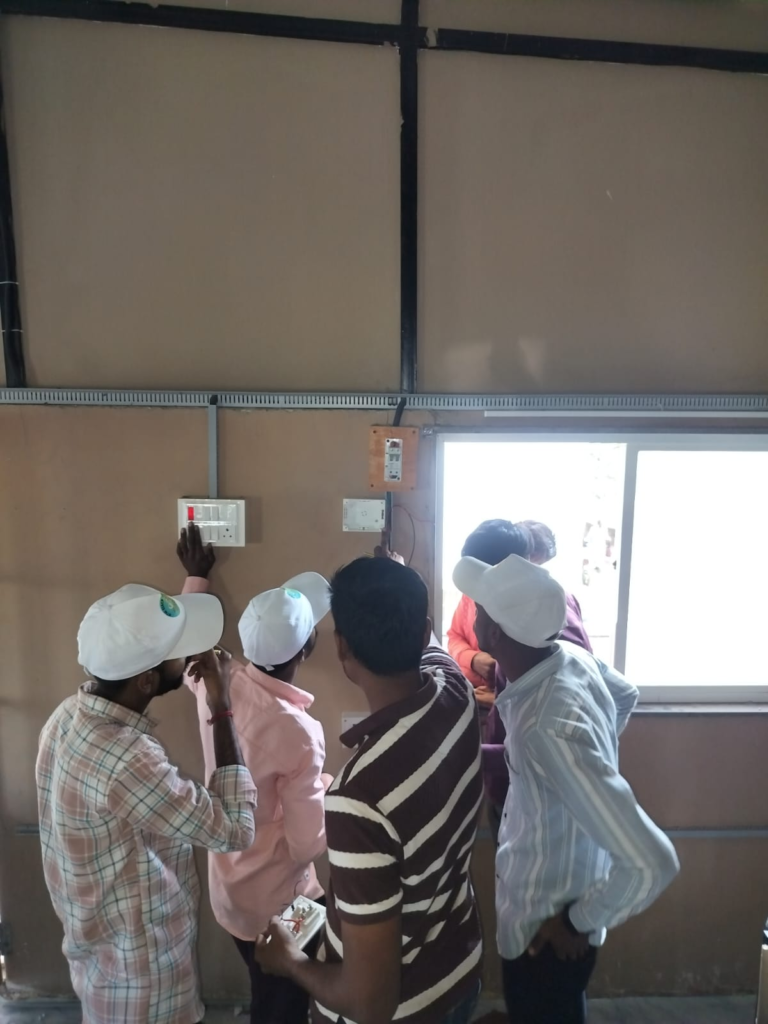
Today I also made a connection for a domestic-level inverter system. An inverter system is useful because it can provide backup electricity when the main power supply is not available.
While making the connection, I learned about the battery, inverter, input supply and output connection. The battery stores electrical energy, and the inverter converts the stored DC power into AC power for suitable household loads. I understood that correct polarity and proper connections are very important while working with batteries and inverters.
I also learned that electrical connections should be made carefully and safely. Before making or changing any connection, the power supply should be switched off. Proper wires, terminals and safety precautions are necessary to avoid short circuits or damage to the equipment.
3. Checking Moringa Leaves in Solar Dryer
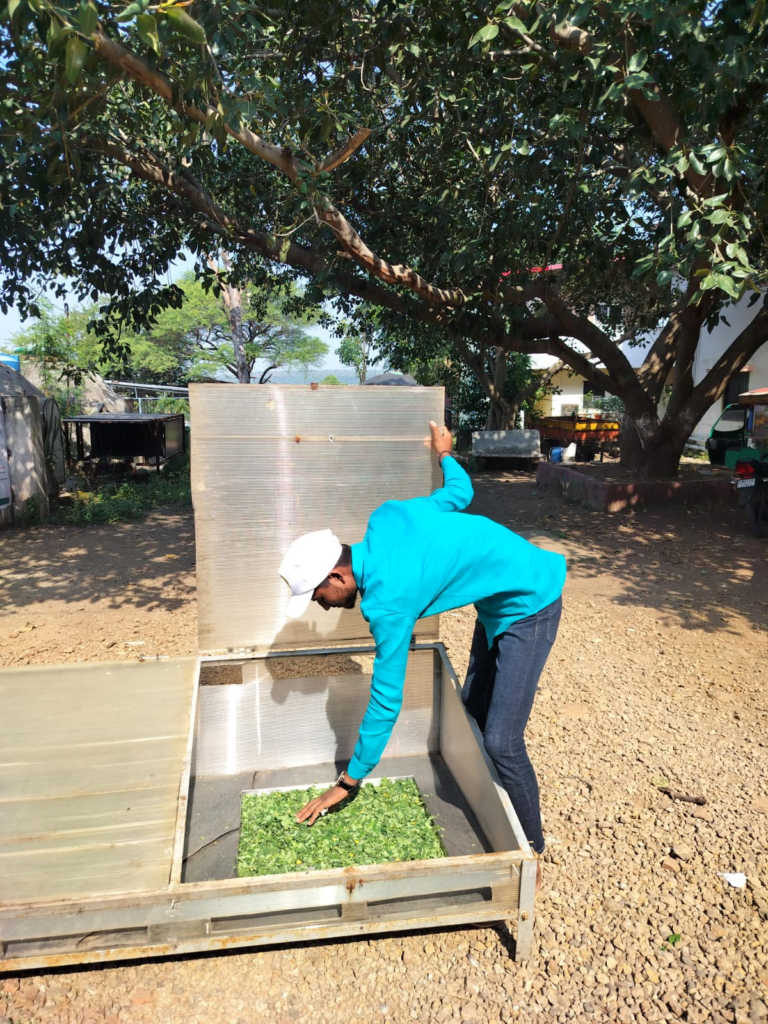
Yesterday, I placed fresh moringa leaves in the solar dryer. Today, I checked the leaves to see the result of the drying process. The leaves were fully dry compared with yesterday. The moisture had been removed by the heat generated inside the solar dryer.
After checking the leaves, I collected the dried moringa leaves and stored them properly for future purposes. This activity helped me understand how solar energy can be used for drying agricultural products without using conventional electricity or fuel.