1. Introduction
A Solar Photovoltaic (PV) system is a technology that converts sunlight directly into electrical energy using solar panels. It is a clean, renewable, and environmentally friendly source of energy. A PV system consists of different components that work together to generate, control, convert, store, and monitor electricity.
2. Step-by-Step Working and Components of a PV System
Step 1: Solar Panels (PV Modules)
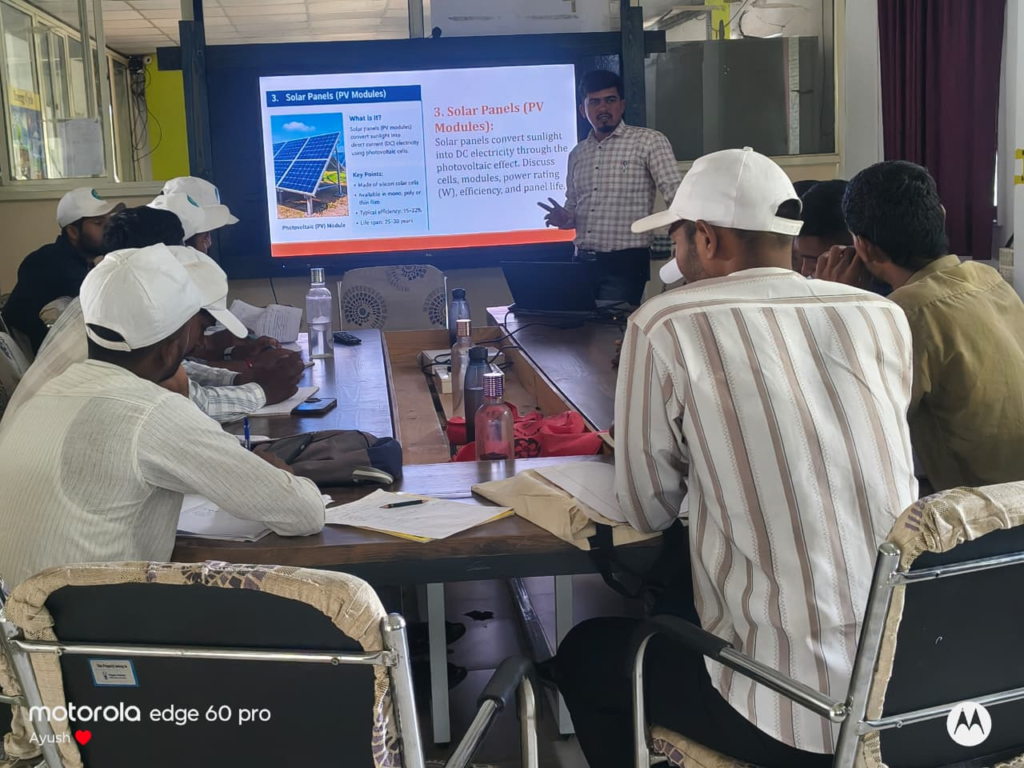
Solar panels are the main components of a PV system. They convert sunlight into Direct Current (DC) electricity through the photovoltaic effect. Solar panels are made of solar cells, commonly using silicon.
There are three main types of solar panels:
- Monocrystalline solar panels
- Polycrystalline solar panels
- Thin-film solar panels
Step 2: Mounting Structure
A mounting structure supports the solar panels and fixes them at the correct tilt and direction to receive maximum sunlight. It can be installed on rooftops or on the ground. Common materials include galvanized steel and aluminium.
Step 3: Solar Tracker
A solar tracker automatically adjusts the position of solar panels to follow the Sun. It helps the panels receive more sunlight and can increase electricity generation. Trackers are mainly of two types: single-axis and dual-axis.
Step 4: Charge Controller
A charge controller regulates the voltage and current supplied to the battery from solar panels. It helps prevent battery overcharging and protects the battery from improper charging.
The two main types are:
- PWM (Pulse Width Modulation)
- MPPT (Maximum Power Point Tracking)
Step 5: Battery
A battery stores the electricity generated by solar panels for later use, such as at night or during periods of insufficient sunlight. Common types include lead-acid and lithium-ion batteries. Batteries are mainly used in off-grid and hybrid solar systems.
Step 6: Solar Inverter
A solar inverter converts DC electricity generated by the solar panels or supplied by batteries into Alternating Current (AC) electricity. Most household appliances use AC electricity.
Common types include string inverters, microinverters, and hybrid inverters.
Step 7: Balance of System (BOS)
The Balance of System includes the additional electrical and mechanical components required for the safe and proper operation of a solar PV system. These include:
- DC and AC cables
- Connectors
- Junction and combiner boxes
- Fuses and circuit breakers
- Isolator switches
- Surge protection devices
- Earthing and lightning protection, where required
These components help connect the system and protect it against electrical faults.
Step 8: Monitoring and Metering
Monitoring and metering systems help measure electricity generation, energy consumption, and overall system performance. They can also help identify faults and display system information through meters, mobile applications, or online dashboards.
Step 9: Grid Connection
In a grid-connected solar PV system, the inverter connects the solar installation to the electricity grid through suitable protection and distribution equipment. A net meter, where permitted, records electricity imported from and exported to the grid according to applicable regulations.
3. Step-by-Step Energy Flow
The working process of a solar PV system is as follows:
- Sunlight falls on the solar panels.
- The panels convert sunlight into DC electricity.
- The charge controller regulates battery charging when one is used.
- The inverter converts DC electricity into AC electricity.
- The electricity supplies household or industrial loads.
- Excess electricity may charge the battery or be exported to the grid, depending on the system design.
Energy flow: Sunlight → Solar Panels → Charge Controller (if required) → Battery (optional) → Inverter → Electrical Loads
The actual connections vary depending on whether the system is off-grid, grid-connected, or hybrid.
4. Benefits of a Solar PV System
- Uses renewable solar energy.
- Helps reduce electricity bills.
- Produces electricity without direct emissions during operation.
- Requires relatively low routine maintenance.
- Can be expanded according to energy requirements.
- Supports sustainable development.
5. Conclusion
A Solar Photovoltaic system consists of several important components, including solar panels, mounting structures, charge controllers, batteries, inverters, protection devices, and monitoring equipment. Each component has a specific function in generating and managing electricity. Understanding these components and their step-by-step working helps us understand how solar energy can be used efficiently and safely for residential, commercial, and industrial applications.