1. Introduction
Today, we learned about the different components used in a solar power system, their types, working principles, and applications. A solar power system converts sunlight into electrical energy that can be used to operate lights, fans, mobile chargers, and other electrical appliances.
2. Different Solar Components and Their Functions

1. Solar Panel (PV Module)
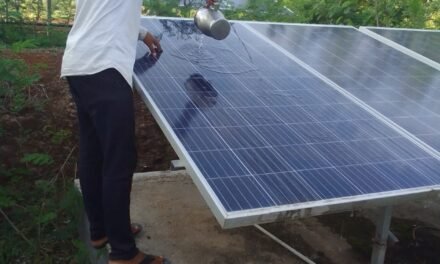
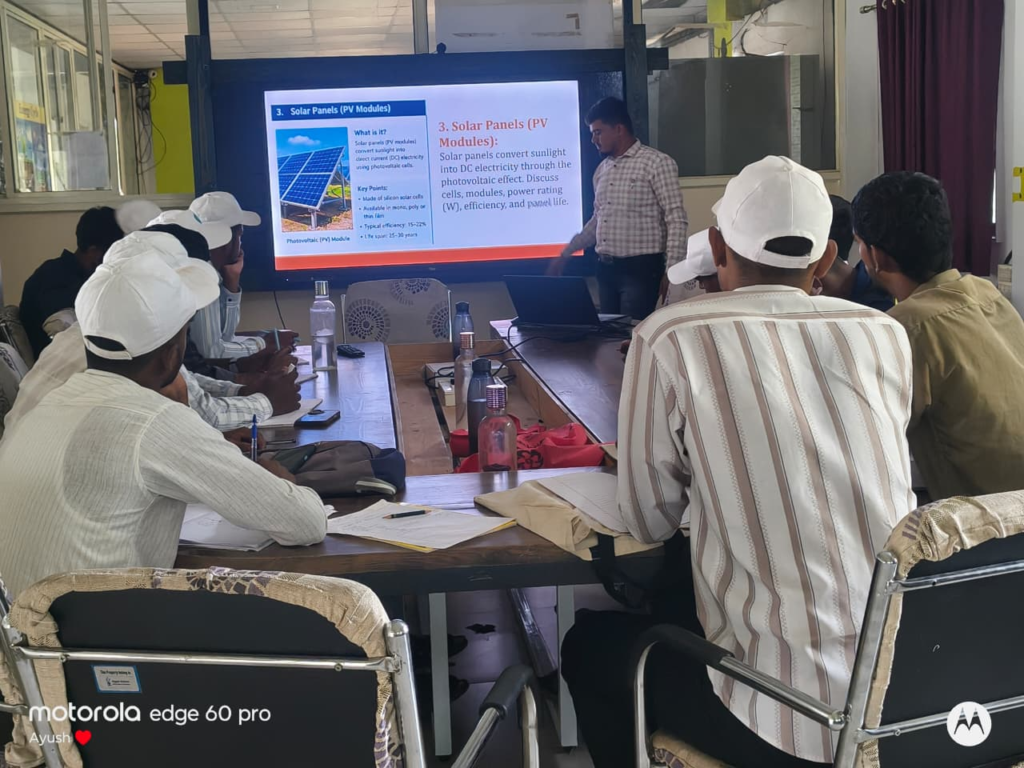
A solar panel converts sunlight into DC (Direct Current) electricity using photovoltaic cells.
- Types: Monocrystalline, polycrystalline, thin-film.
- Uses: Homes, farms, streetlights, and solar water pumps.
- Example: A 6 W solar panel can supply power to a small solar project under suitable sunlight conditions.

2. Solar Charge Controller
A charge controller regulates the power flowing from the solar panel to the battery. It helps prevent overcharging and may provide low-voltage protection.
- Types: PWM (Pulse Width Modulation) and MPPT (Maximum Power Point Tracking).
- PWM: Simple and generally economical.
- MPPT: Tracks the panel’s maximum-power point and can harvest more energy in suitable conditions.

3. Solar Battery
The battery stores electrical energy generated by the solar panel for use when sunlight is unavailable.
- Types: Lead-acid, lithium-ion, and LiFePO₄ (lithium iron phosphate).
- Applications: Night lighting, backup power, and off-grid systems.
- Battery voltage and chemistry must match the charge controller and system design.

4. Solar Inverter
An inverter converts DC electricity from solar panels or a battery into AC (Alternating Current) electricity for compatible appliances.
- Types: Off-grid, grid-tied, and hybrid inverters.
- Uses: Operating AC fans, televisions, refrigerators, and other appliances.
- A small DC-only solar system may not need an inverter.

5. Solar Wires and Connectors
Wires carry electricity between the solar panel, charge controller, battery, inverter, and loads.
- Types: Solar DC cables, battery cables, AC cables, and compatible PV connectors such as MC4.
- Function: Provide safe and reliable electrical connections.
- Cable size must be selected according to current, length, and voltage drop.

6. Mounting Structure
The mounting structure holds solar panels securely and positions them toward the sun.
- Types: Rooftop structures, ground-mounted frames, and pole mounts.
- Materials: Commonly aluminium or galvanized steel.
- Importance: Provides stability and helps panels receive suitable sunlight.

7. Protection Devices
Protection devices help isolate the system and reduce risks from overcurrent, short circuits, and voltage surges.
- Fuse / DC MCB: Protects against specified overcurrent conditions.
- Isolator: Disconnects equipment for safe maintenance.
- SPD (Surge Protection Device): Helps protect against transient voltage surges.
- Proper earthing and correctly rated protection are essential.

8. Electrical Loads
Loads are the devices that consume the electricity produced by the solar system.
- DC loads: DC LED lights, DC fans, and compatible USB chargers.
- AC loads: Household appliances powered through a suitable inverter.
- The total load must be within the capacity of the system.
3. How a Solar Power System Works
Sunlight
Solar Panel — produces DC electricity
Charge Controller — regulates battery charging
Battery — stores energy
Electrical Load — uses the stored or generated power