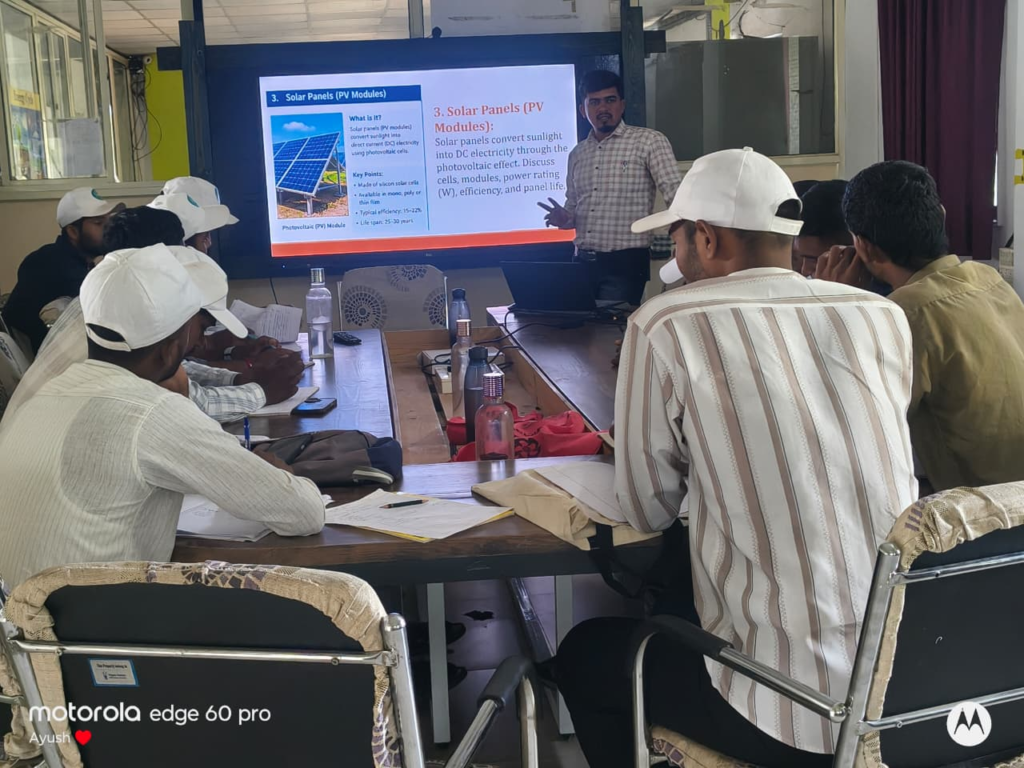
A Photovoltaic (PV) system converts sunlight into electrical energy using solar panels.
Main Components and Their Functions
1. Solar PV Panel: Converts sunlight into DC (Direct Current) electricity.
2. Inverter: Converts DC electricity into AC (Alternating Current) electricity for household appliances.
3. Battery: Stores electrical energy for use at night or during power cuts.
4. Charge Controller: Regulates the voltage and current supplied to the battery to help prevent overcharging.
5. Mounting Structure: Supports solar panels and holds them at the correct angle to receive sunlight.
6. Cables and Connectors: Connect the components and carry electrical power.
7. Protection Devices: Fuses, circuit breakers and surge protection devices help protect the system from electrical faults.
8. Energy Meter: Measures the electricity generated, consumed or exported, depending on the system.
How Does a PV System Work?

Working process:
Sunlight → Solar Panel → DC Electricity → Inverter → AC Electricity → Electrical Appliances
Types of PV Systems
- On-grid: Connected to the electricity grid.
- Off-grid: Works independently of the grid, usually with battery storage.
- Hybrid: Combines a grid connection with battery storage.
Conclusion: The solar panel is the main component of a PV system. The inverter, mounting structure, wiring and protection devices help convert, support and safely deliver the generated electricity. Battery and charge-controller requirements depend on the system design.