
1. Ohm’s Law
Ohm’s Law describes the relationship between voltage (V), current (I), and resistance (R).

Formula:
Where:
- V = Voltage, measured in volts (V)
- I = Current, measured in amperes (A)
- R = Resistance, measured in ohms (Ω)
So:
Example: If and :
2. AC vs DC
| Feature | AC | DC |
|---|---|---|
| Full form | Alternating Current | Direct Current |
| Direction | Changes direction periodically | Flows in one direction |
| Voltage | Usually changes with time | Usually constant |
| Common source | Household electricity | Battery |
| Example | 230 V household supply | 1.5 V, 9 V battery |
| Common use | Homes, industries, power transmission | Electronics, batteries, charging systems |
Easy way to remember:
- AC: current goes → ← → ←
- DC: current goes → → → →
3. Earthing
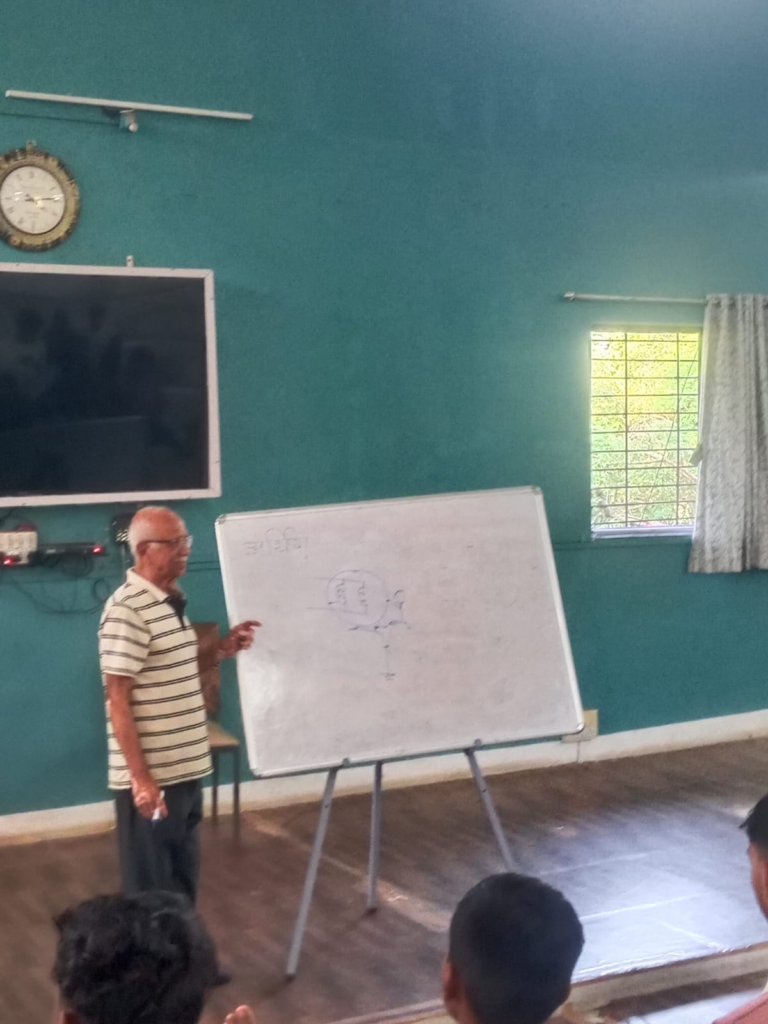

Earthing is a safety system that provides a low-resistance path for unwanted electrical current to flow safely into the ground.
For example, if the insulation of a metal-bodied appliance fails and the live wire touches its metal body, the body could become dangerous to touch. Earthing helps carry the fault current safely toward ground and allows protective devices such as a fuse/MCB/RCD to disconnect the supply.
Why earthing is important
- Protects people from electric shock.
- Protects electrical equipment.
- Helps protective devices operate during faults.
- Keeps exposed metal parts near ground potential.