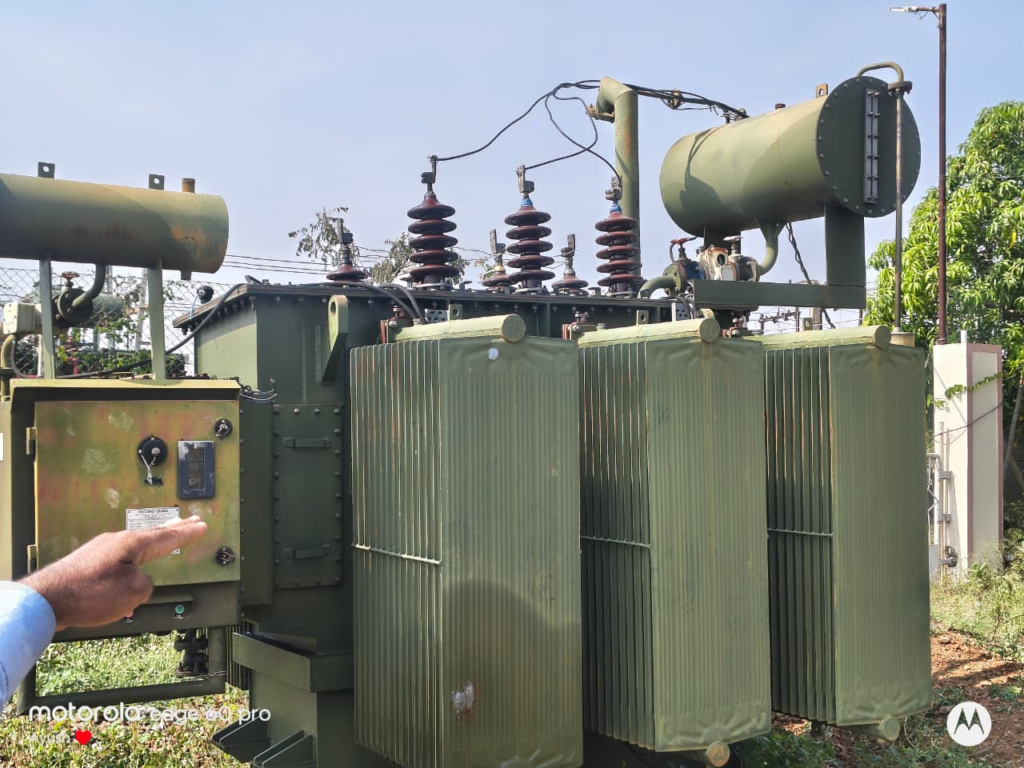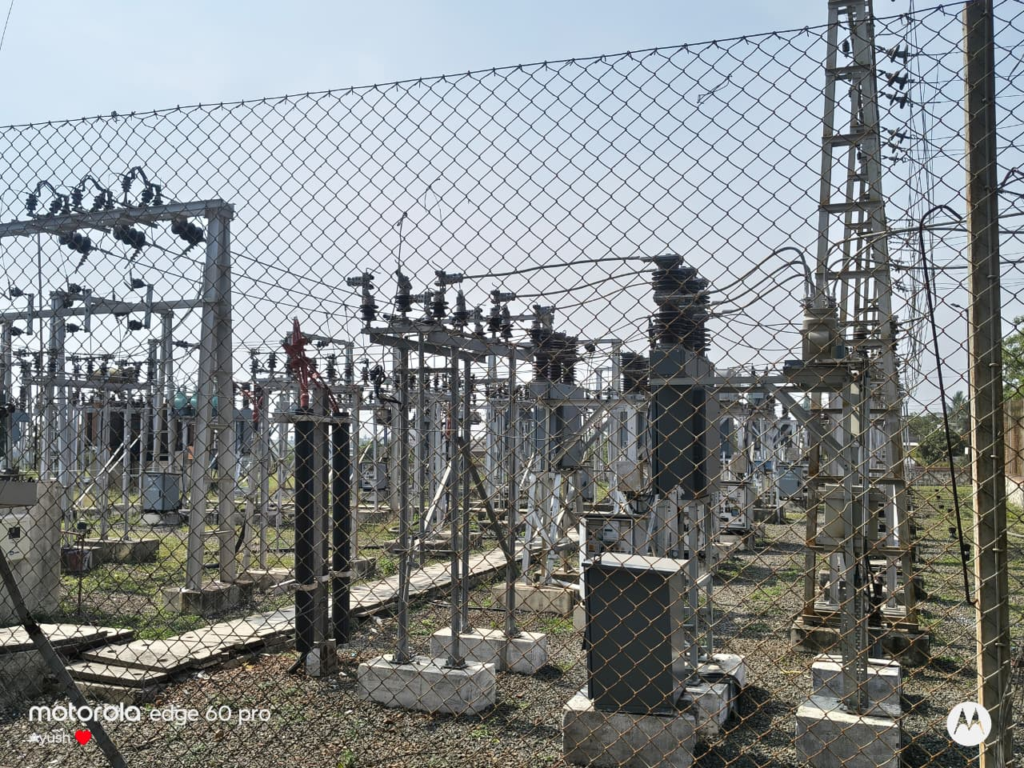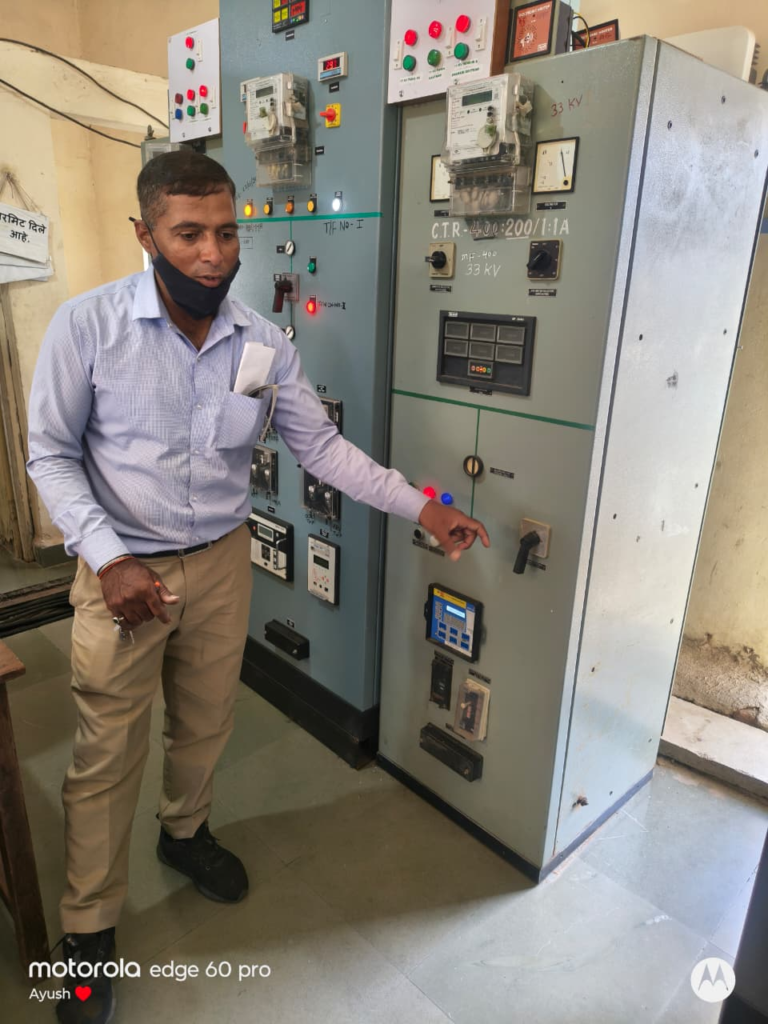
Our educational field visit to a 33 kV / 11 kV electrical substation was a valuable learning experience. The main purpose of this visit was to understand the working principle of a transformer, its different parts, winding, earthing system, capacitor bank, electrical grid, and control centre. We observed the equipment and learned how electrical energy is distributed safely and efficiently to consumers.
Step 1: Visit to the 33 kV / 11 kV Substation
First, we visited the 33 kV / 11 kV substation with our teachers and instructors. The staff explained the importance of the substation in the electrical power distribution system. A substation receives electrical power at 33 kV and steps down the voltage to 11 kV for further distribution to different areas. We also learned about the importance of safety rules, warning signs, and protective equipment in an electrical substation.
Step 2: Understanding the Transformer
The transformer was one of the main components we studied during the visit. A transformer is an electrical device that transfers electrical energy from one circuit to another through electromagnetic induction. At this substation, the transformer reduces the voltage from 33 kV to 11 kV.
We understood that a transformer operates on the principle of mutual induction. It helps maintain an appropriate voltage level for the electrical distribution system. Transformers are essential for reducing transmission and distribution losses and supplying electricity at suitable voltage levels.
Step 3: Study of Transformer Parts
We learned about the main parts of a transformer, including the core, primary winding, secondary winding, transformer tank, insulating oil, bushings, conservator tank, breather, radiators, and protective devices.
The core provides a path for magnetic flux. The windings transfer electrical energy through electromagnetic induction. The tank contains the core, windings, and insulating oil in an oil-filled transformer. The oil provides insulation and helps remove heat. Radiators cool the transformer, while bushings provide insulated connections for electrical conductors.
Step 4: Understanding Transformer Winding
We studied the primary and secondary windings of the transformer. The primary winding receives electrical energy from the 33 kV supply, while the secondary winding delivers electrical energy at 11 kV. The number of turns in each winding determines the voltage transformation ratio.
We understood that the primary winding has more turns than the secondary winding in a typical step-down transformer. This arrangement helps reduce the voltage while increasing the available current for a given power level, allowing for normal operating losses.
Step 5: Earthing System
Next, we learned about the earthing system. Earthing connects exposed conductive parts of electrical equipment to the ground through a suitable protective arrangement. It helps reduce the risk of electric shock and provides a path for fault current so that protective devices can operate.
We learned that proper earthing is essential for transformers, metal structures, and other electrical equipment. Substations use designed earthing systems to improve safety for both workers and the public.
Step 6: Capacitor Bank
We also learned about the capacitor bank installed in electrical power systems. A capacitor bank supplies reactive power and helps improve the power factor. Better power factor can reduce unnecessary current flow and improve the efficiency of the electrical distribution system.
We understood that capacitor banks help maintain better voltage conditions and support the efficient operation of electrical equipment. Their switching and protection must be handled according to the substation’s operating procedures.
Step 7: Electrical Grid and Control Centre
During the visit, we learned about the electrical grid, which connects generating stations, transmission lines, substations, and distribution networks. The grid makes it possible to transfer electricity from generating stations to consumers.
We also observed the control centre, where operators monitor electrical parameters such as voltage, current, load, and equipment status. The control centre helps staff operate switching equipment, monitor faults, and coordinate power distribution. Monitoring systems and protective relays help identify abnormal conditions and support reliable operation.
Step 8: Safety and Learning Outcomes
Finally, we understood the importance of safety in a high-voltage substation. We learned that visitors must follow staff instructions, maintain safe distances, and never touch electrical equipment. Only authorized and trained personnel should operate or maintain substation equipment.
This field visit helped us connect classroom theory with practical electrical engineering. We gained knowledge about transformers, winding, earthing, capacitor banks, the electrical grid, and the control centre.