
1. Introduction
A solar water heater is a device that uses sunlight to heat water. It converts solar energy into heat energy. It is commonly used in homes, schools, hostels, hotels and hospitals. It helps save electricity and reduces the cost of heating water. It is an eco-friendly system because it uses renewable energy from the sun.
2. Main Components
- Solar Collector: Absorbs sunlight and converts it into heat energy.
- Storage Tank: Stores hot water for later use.
- Water Pipes: Carry cold and hot water through the system.
- Insulation: Reduces heat loss from the storage tank.
- Support Frame: Holds the solar collector in a suitable position.
- Inlet Pipe: Supplies cold water to the system.
- Outlet Pipe: Supplies hot water for daily use.
3. Working Process of a Solar Water Heater
Step 1: Absorption of Sunlight
Sunlight falls on the solar collector. The collector absorbs solar radiation and converts it into heat energy. The absorber plate is usually dark in colour so that it can absorb more sunlight.
Step 2: Heating the Water
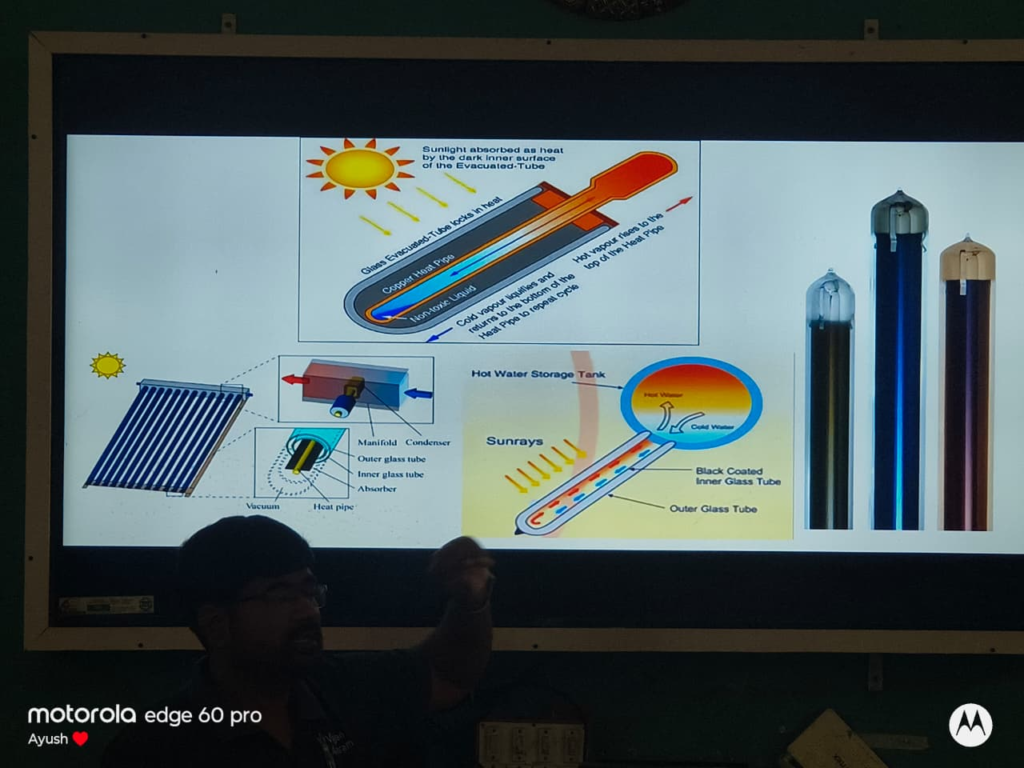
Cold water enters the solar collector through the pipes. The heat absorbed by the collector transfers to the water flowing through the tubes. As a result, the temperature of the water increases.
Step 3: Circulation of Water
In a natural-circulation system, hot water becomes lighter and rises toward the storage tank. Cooler water moves down into the collector to be heated again. This process is called the thermosiphon effect. Some solar water heaters use an electric pump to circulate water.
Step 4: Storage of Hot Water
The heated water collects in an insulated storage tank. The insulation reduces heat loss and helps keep the water hot for a longer time. The stored water can be used when required.
Step 5: Use of Hot Water
Hot water flows from the storage tank through the outlet pipe. It is used for bathing, washing clothes, cleaning utensils and other household activities.
4. Types of Solar Water Heaters
1. Flat Plate Collector (FPC): It uses a flat absorber plate and connected tubes to absorb solar heat and transfer it to water.
2. Evacuated Tube Collector (ETC): It uses special glass tubes with a vacuum layer that helps reduce heat loss and heat the water.

5. Advantages
- Saves electricity and fuel.
- Uses renewable solar energy.
- Reduces electricity bills.
- Helps reduce environmental pollution.
- Has low operating costs after installation.
6. Safety Precautions
- Install the system securely.
- Check pipes and joints regularly for leakage.
- Avoid touching hot pipes and water directly.
- Use a qualified technician for installation and repairs.
- Maintain proper temperature and pressure control