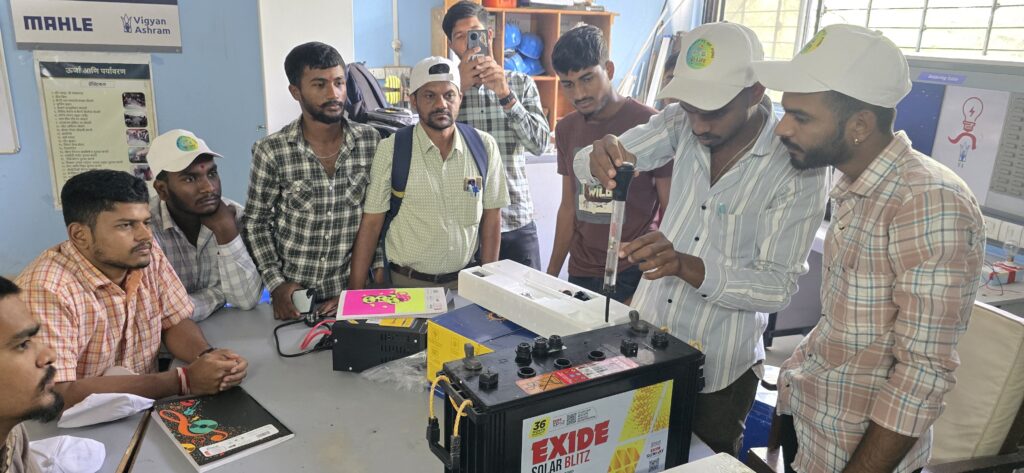
1. Battery Identification
- Check the battery type: Lead-acid, Lithium-ion, etc.
- Check the voltage rating (e.g., 12V, 24V, 48V).
- Check the Ah capacity (e.g., 100Ah).
- Check the positive (+) and negative (−) terminals.
- Check the battery label, model number, and manufacturer details.
2. Battery Testing
- Inspect the battery for damage, leakage, or swelling.
- Use a multimeter to measure the battery voltage.
- Check the terminal connections for corrosion or looseness.
- For lead-acid batteries, check the electrolyte level/specific gravity if applicable.
- Compare the measured voltage with the battery’s rated voltage.
3. Battery Connection
- Switch OFF the system before making connections.
- Identify positive (+) and negative (−) terminals correctly.
- Connect the battery according to the required configuration:
- Series connection: increases voltage.
- Parallel connection: increases Ah capacity.
- Use properly rated cables, fuses/breakers, and suitable PPE.
- Tighten terminals properly and verify polarity before switching the system ON.
Example: Two 12V, 100Ah batteries in series = 24V, 100Ah.