Pav Making
Objective
To learn the process of making soft pav and understand the costing of the ingredients and production.
Materials Used
- Maida
- Yeast
- Salt
- Sugar
- Bread improver
- Lukewarm water
Process
- First, all the ingredients were measured according to the required quantity.
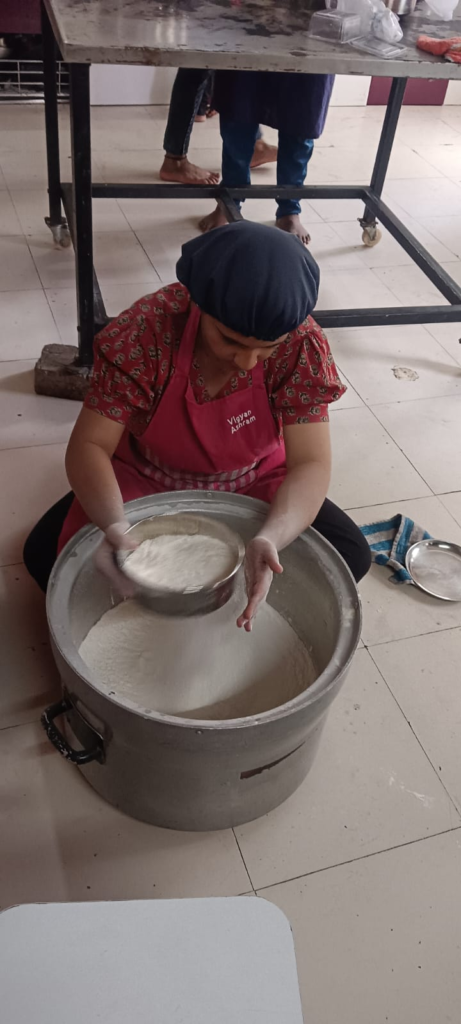
- Maida was taken in a large mixing vessel.
- Yeast, sugar, salt and bread improver were added to the maida.
- All the dry ingredients were mixed properly.
- Lukewarm water was added gradually and the mixture was kneaded to form a soft dough.
- The dough was kneaded well until it became smooth and properly combined.
- The dough was kept for first fermentation for about 10–15 minutes.
- After the first fermentation, the dough was kneaded again.
- The dough was divided into equal portions of approximately 55 g.
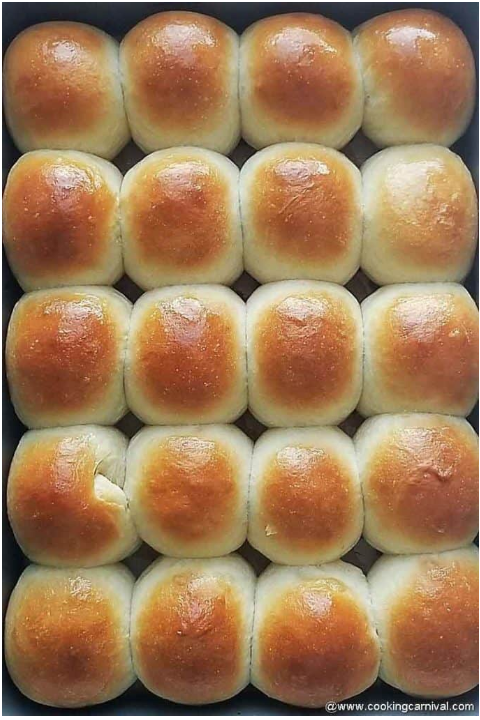
- Each portion was shaped into pav and arranged closely on a greased tray.
- The shaped pav was kept for final fermentation for about 1–1.5 hours, or until the dough increased in size.
- The fermented pav was baked in a preheated oven at 180°C.
- After baking, the pav was kept aside for cooling.
Costing
| Sr. No. | Material | Weight/Quantity | Rate | Price |
|---|---|---|---|---|
| 1 | Maida | 7 kg | ₹50/kg | ₹350 |
| 2 | Yeast | 150 g | ₹180/kg | ₹27 |
| 3 | Salt | 150 g | ₹30/kg | ₹4.50 |
| 4 | Sugar | 250 g | ₹80/kg | ₹18 |
| 5 | Bread Improver | 14 g | ₹500/kg | ₹7 |
| 6 | Oven Charge | 3 units | ₹10/unit | ₹30 |
| Total | ₹436.50 | |||
| Labour Charge (35%) | ₹152.78 | |||
| Final Cost | ₹589.28 |
Result
The pav was prepared successfully. I learned the complete process of measuring, mixing, kneading, fermentation, shaping and baking the pav. I also learned how to calculate the total production cost including labour and oven charges.
Conclusion
Through this activity, I learned the practical method of making pav and how costing is calculated for the prepared product.