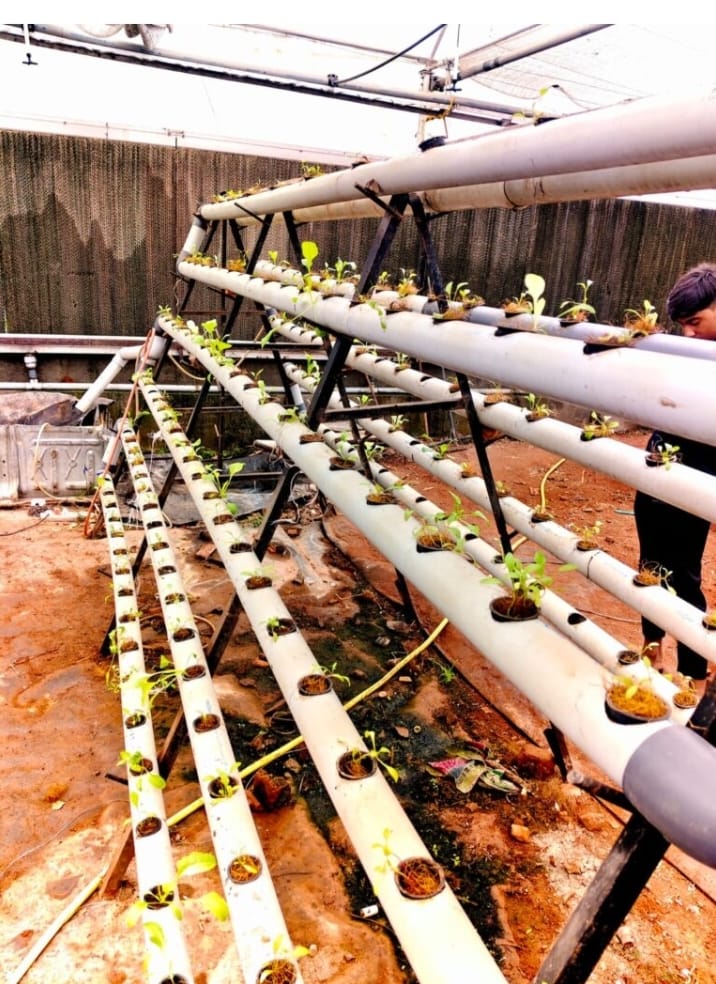
Hydroponics is a method of growing plants without soil. Instead of soil, the roots receive nutrients from a nutrient-rich water solution.
Why is Hydroponics used?
Soil is not required.
Plants are grown in water instead of soil.
It is useful in places where fertile land is not available.
It is suitable for growing vegetables and other crops.
Things Required for Hydroponics
Water
Nutrients
Oxygen
Proper sunlight or Grow Light
Correct pH
Correct EC (Electrical Conductivity)
Proper temperature
Advantages of Hydroponics
Saves water – The same water is reused, so water consumption is reduced.
Plants grow faster – Nutrients are supplied directly to the roots, resulting in better growth.
No soil is needed – So there are fewer soil-related problems.
Fewer pests and diseases than soil farming.
Fresh and clean vegetables are produced.
Crops can be grown throughout the year.
Crops Grown in Hydroponics
Lettuce
Spinach
Fenugreek (Methi)
Strawberry
Chilli
Tomato
Cucumber
Kakdi (Long cucumber)
Importance of Oxygen
Plant roots need oxygen for respiration.
In hydroponics:
In DWC (Deep Water Culture), oxygen is supplied using an air pump.
In NFT (Nutrient Film Technique), flowing water provides oxygen to the roots.
Growing Media Used
Instead of soil, hydroponics uses growing media such as:
Cocopeat
Coco Coir
These provide support to the plant roots.
Main Components of a Hydroponic System
Water tank (Reservoir)
Pump
PVC pipe
Net pot
Nutrient solution
Net cup
Types of Hydroponics