1. Bamboo Dryer
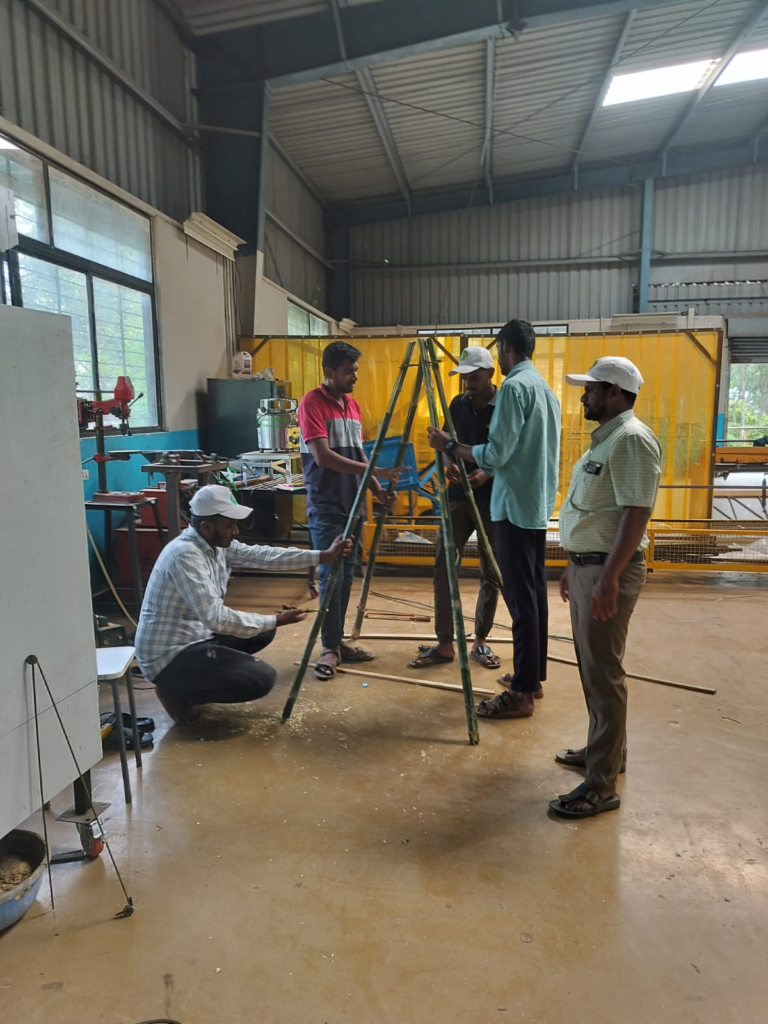
A bamboo dryer is a drying system used to remove moisture from bamboo and other materials. Proper drying is important because excess moisture can cause bamboo to crack, bend, develop fungus, or lose strength.
Working of Bamboo Dryer
- Bamboo pieces are placed inside the drying chamber.
- Heat is supplied to the chamber, either from solar energy, electrical heating, or another heat source.
- Warm air circulates around the bamboo.
- The heat removes moisture from the bamboo.
- Moist air is allowed to escape through ventilation.
- The bamboo is dried gradually until it reaches the required moisture level.
Main Parts
- Drying chamber
- Bamboo racks/trays
- Heat source or solar collector
- Air inlet and outlet
- Fan/blower for air circulation
- Temperature and humidity monitoring system
Advantages
- Reduces moisture content.
- Helps prevent fungus and decay.
- Improves bamboo quality and strength.
- Gives more uniform drying.
- Can reduce drying time compared with natural open-air drying.
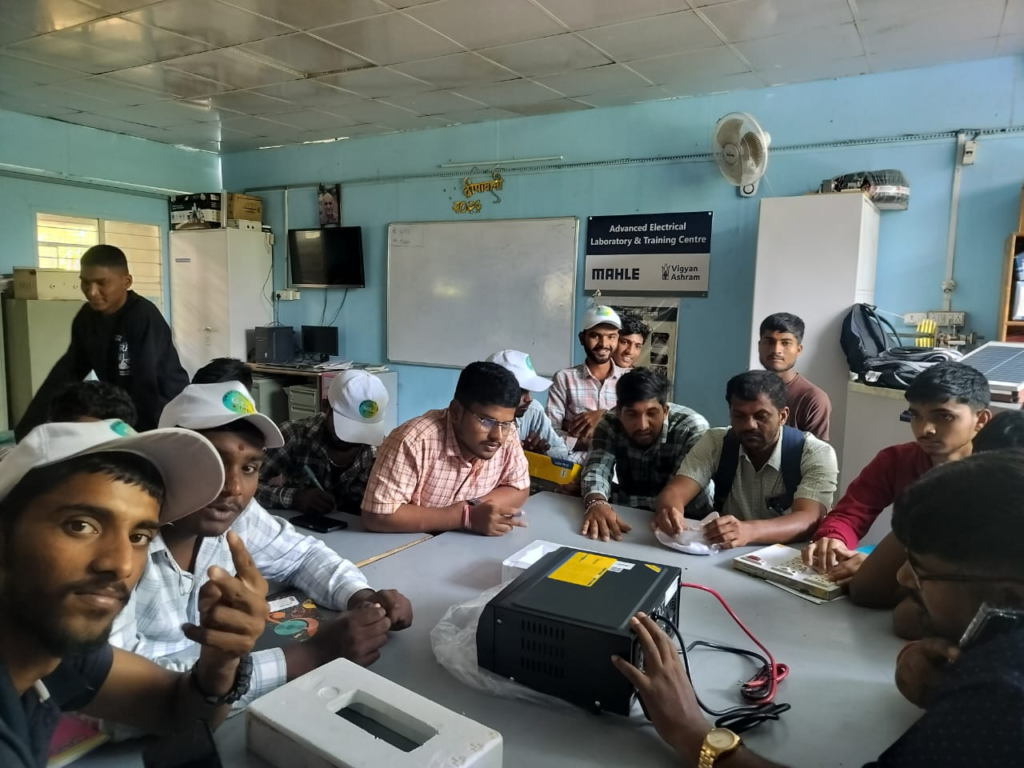
2. Solar Inverter Fitting and Battery Installation
A solar inverter converts the DC electricity produced by solar panels and/or stored in the battery into AC electricity that can be used by electrical appliances. A battery stores electrical energy for use when solar power is insufficient.
Basic Connection
Solar Panel → Solar Inverter → AC Load
and
Solar Inverter ↔ Battery
The exact terminals and wiring depend on the inverter model, so the manufacturer’s wiring diagram should always be followed.
Proper Installation in the Room
- Select a dry, clean and well-ventilated location.
- Fix the inverter firmly on a suitable wall or mounting surface.
- Keep sufficient space around the inverter for ventilation and maintenance.
- Install the battery in a suitable, stable location away from heat and water.
- Connect the battery to the inverter using the correct cable size and polarity.
- Connect the solar panel input to the inverter according to its specified voltage/current range.
- Connect the AC output to the required load through appropriate protection devices.
- Check all terminals and connections before switching on the system.
- Switch on the system according to the manufacturer’s recommended sequence.
- Check the inverter display for charging, battery status, solar input, and output.
Important Safety Points
- Do not reverse battery polarity.
- Use the correct fuse/MCB/DC protection as specified by the system.
- Do not touch exposed live terminals.
- Keep the battery and inverter away from water and excessive heat.
- Ensure proper earthing where required.
- Use cables of the correct rating.
- Battery terminals can carry very high current, so avoid short circuits.
What I Learned Today
Today I learned about the working and basic construction of a bamboo dryer and also learned about the proper installation of a solar inverter with a battery, including mounting, wiring, connections, ventilation, protection, and basic electrical safety.