
1. Solar Water Heater
A solar water heater is a system that uses sunlight to heat water instead of using electricity or fuel.
Working principle
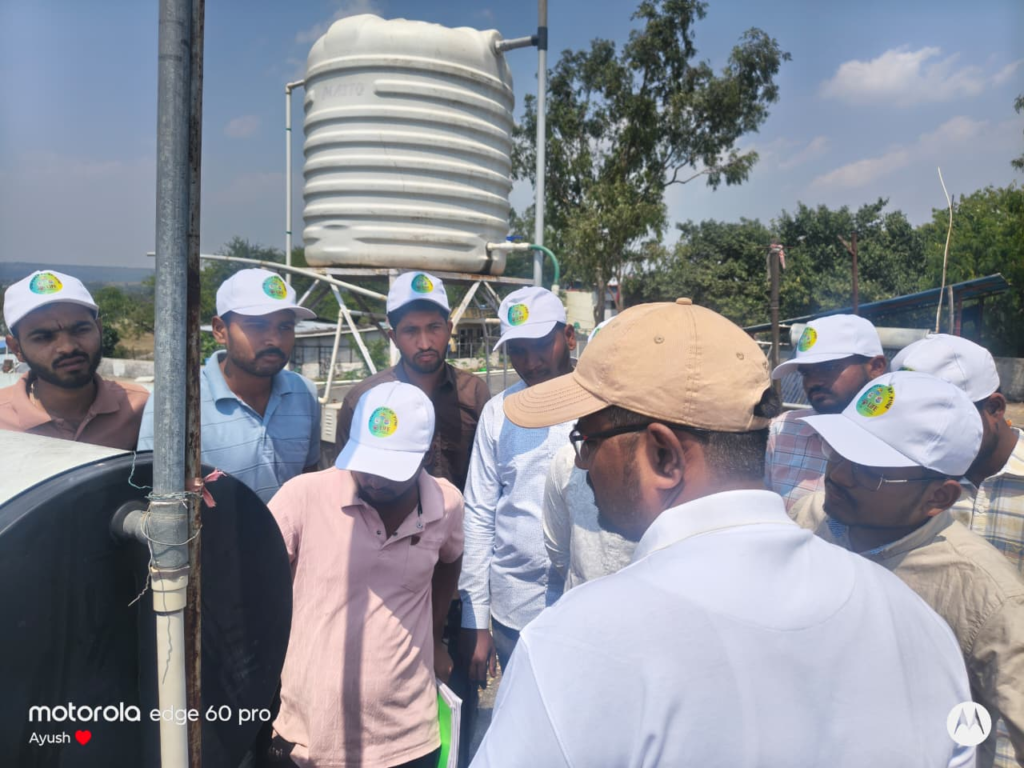
Solar radiation falls on a solar collector. The collector absorbs solar energy and converts it into heat. This heat is transferred to water, which is then stored in an insulated tank for later use.
Basic flow:
Sunlight → Solar collector → Heat transfer → Hot water → Storage tank → Use
Main components
- Solar collector – absorbs solar radiation.
- Storage tank – stores hot water.
- Insulated pipes – carry water while reducing heat loss.
- Insulation – prevents heat from escaping from the tank and pipes.
- Stand/support structure – holds the collector at the proper angle.
- Cold-water inlet and hot-water outlet – allow water circulation.
Types
- Flat-plate collector
- Uses a dark absorber plate with tubes.
- Simple, durable, and commonly used.
- Evacuated tube collector (ETC)
- Uses glass tubes with a vacuum layer.
- Has lower heat loss and performs well in colder conditions.
Advantages
- Reduces electricity consumption.
- Uses renewable solar energy.
- Low operating cost.
- Environmentally friendly.
- Requires relatively little maintenance.
- Useful for homes, hotels, hospitals, and industries.
Disadvantages
- Initial installation cost can be high.
- Performance depends on sunlight.
- A backup heating system may be needed during cloudy weather.
- Requires suitable roof or open space.
Applications
- Domestic hot-water supply.
- Hotels and hostels.
- Hospitals.
- Swimming pools.
- Industrial hot-water requirements.
2. Solar Dryer
A solar dryer is a device that uses solar energy to remove moisture from agricultural and food products such as fruits, vegetables, grains, spices, fish, and herbs.
The main purpose is to dry products faster and more hygienically than traditional open-sun drying.
Working principle
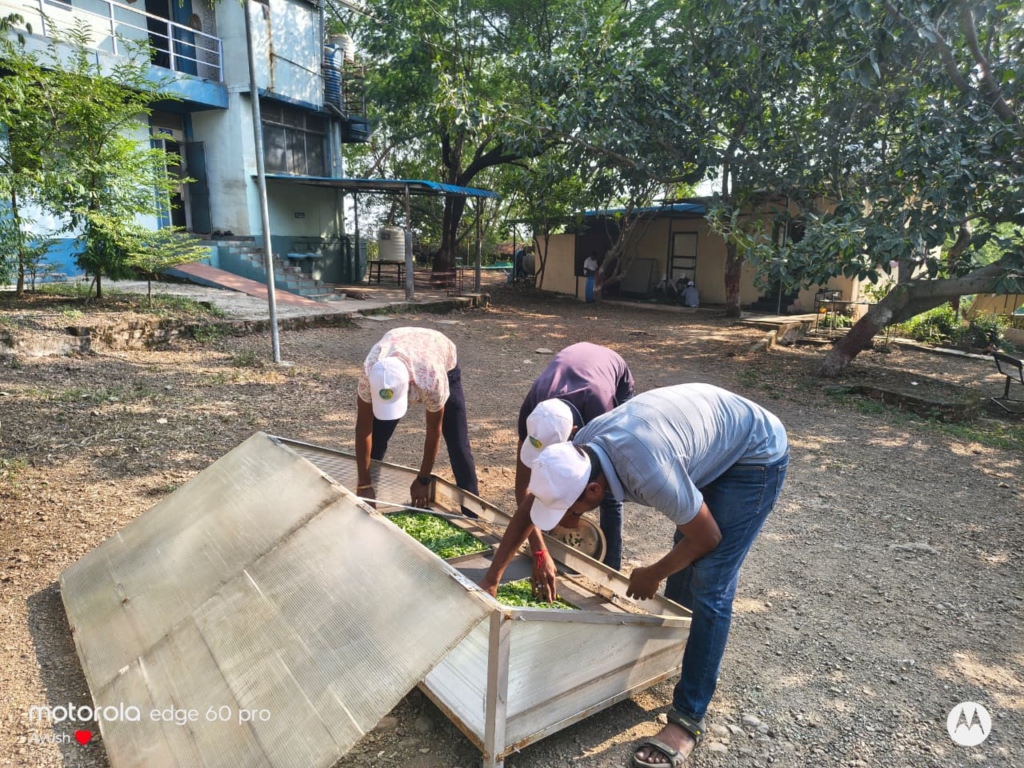
Solar radiation heats the air inside the dryer. The warm air passes over the wet product and absorbs moisture. The moist air is then removed from the dryer, reducing the moisture content of the product.
Basic flow:
Sunlight → Solar collector/chamber → Hot air → Wet product → Moisture removal → Dried product
Main components
- Solar collector – heats the air using solar energy.
- Drying chamber – contains the material being dried.
- Trays/racks – hold the product.
- Air inlet – allows fresh air to enter.
- Air outlet/vent – removes moist air.
- Transparent cover – allows solar radiation to enter.
- Insulation – reduces heat loss.
Types of solar dryers
- Direct solar dryer
- Product is exposed directly to solar radiation.
- Simple construction.
- Indirect solar dryer
- Air is heated in a separate solar collector.
- Heated air is then passed through the drying chamber.
- Provides better protection of the product from direct sunlight.
- Mixed-mode solar dryer
- Uses both direct solar radiation and heated air.
- Can provide faster drying.
- Cabinet solar dryer
- Small enclosed dryer suitable for household or small-scale applications.