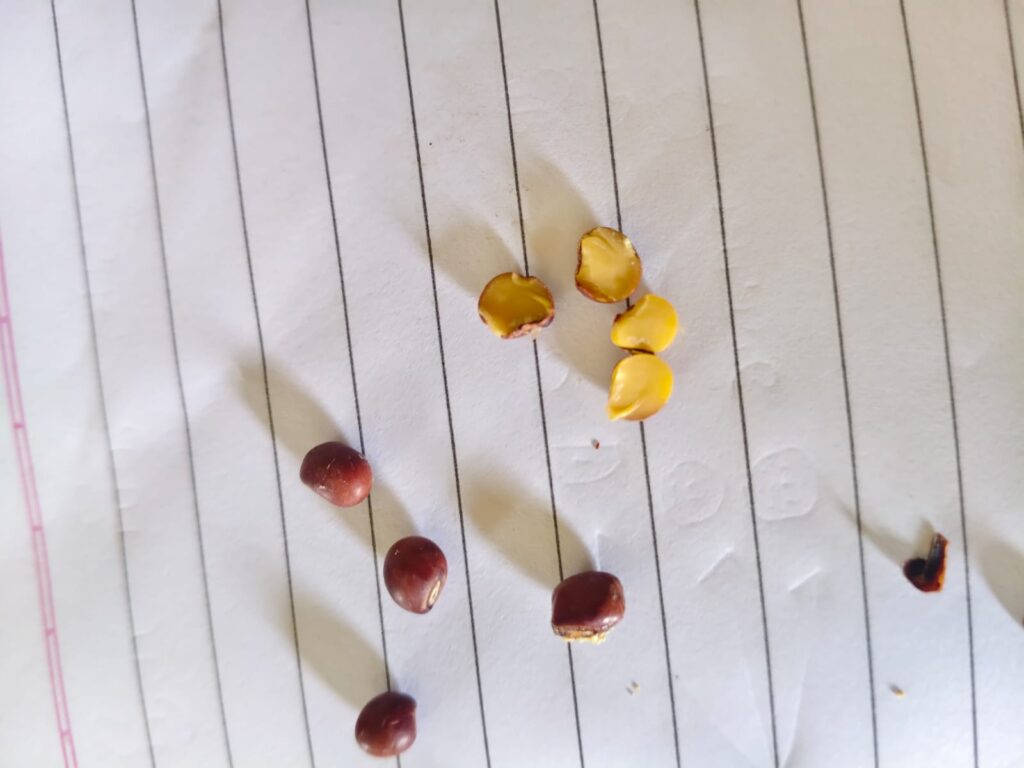
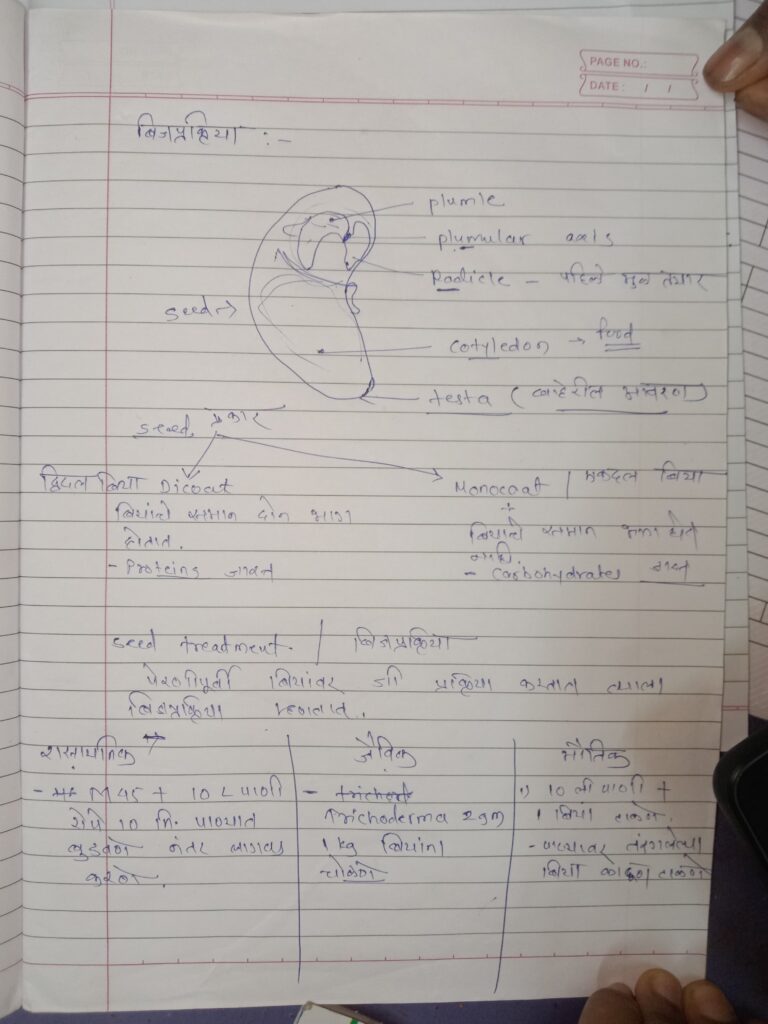
Structure of a Seed (Dicot Seed) Plumule – The embryonic shoot. It grows into the stem and leaves. Plumular Axis – The part of the embryo connecting the plumule with the cotyledons. Radicle – The embryonic root. It develops into the first root of the plant. Cotyledon – The seed leaf. It stores food and provides nutrition to the young plant during germination. Testa – The seed coat, which protects the seed from damage, insects, and diseases.
Types of Seeds Dicot Seed (Two Cotyledons) Has two cotyledons. Stores food mainly in the cotyledons. Rich in proteins. Examples: Bean, Gram (Chickpea), Pea. Monocot Seed (One Cotyledon) Has one cotyledon. Food is mainly stored in the endosperm. Rich in carbohydrates. Examples: Rice, Wheat, Maize.
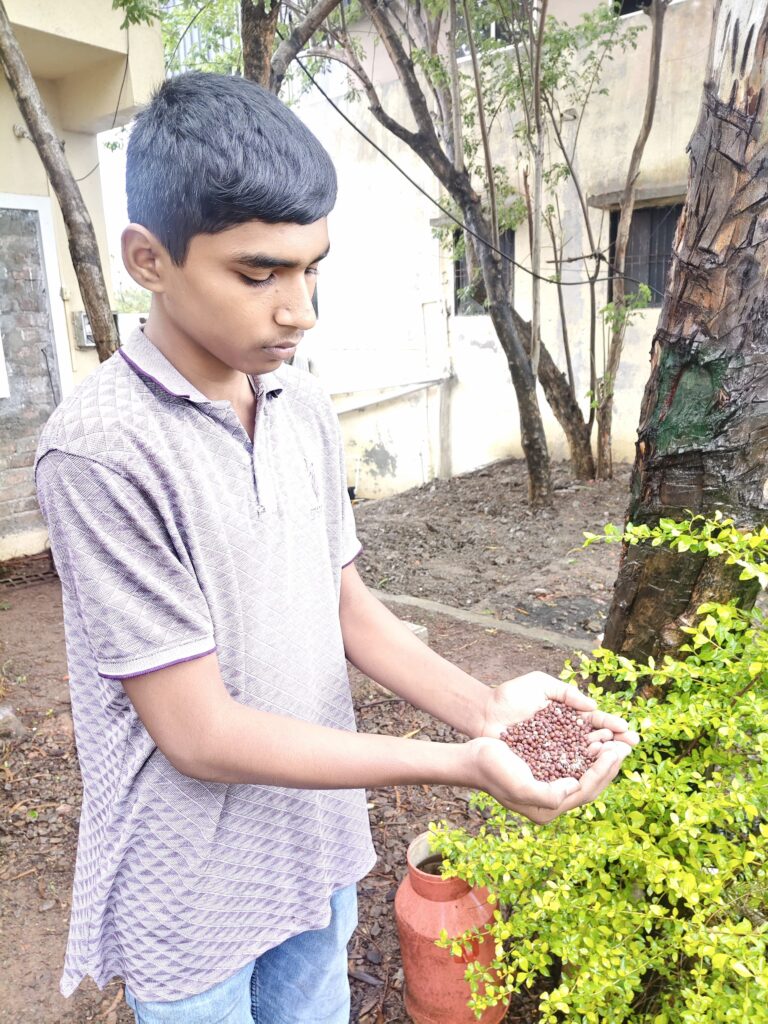
Seed Treatment Seed treatment is the process of treating seeds before sowing to protect them from diseases, insects, and fungi and to improve germination. A. Chemical Seed Treatment Use a fungicide such as M-45 (Mancozeb). Mix 10 g of fungicide with 10 ml of water and coat 1 kg of seeds evenly. B. Biological Seed Treatment Use Trichoderma. Mix 2 g of Trichoderma per 1 kg of seeds. It protects seeds from fungal diseases naturally. C. Organic Seed Treatment Seeds can be treated with cow urine or neem-based solution before sowing. This helps reduce diseases and improves healthy seedling growth. Summary: A seed consists of the plumule, radicle, cotyledons, and testa. Seeds are classified as dicot (two cotyledons) or monocot (one cotyledon). Before sowing, seeds are treated using chemical, biological, or organic methods to improve germination and protect against diseases.
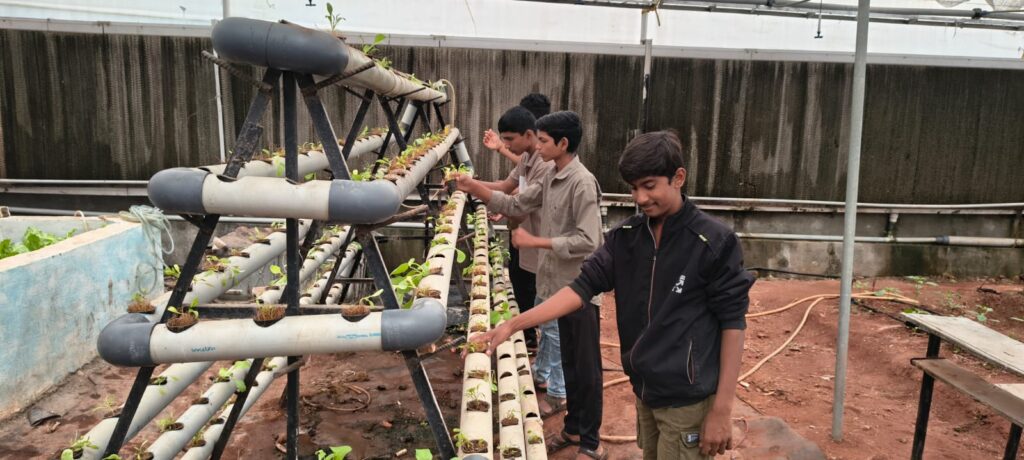
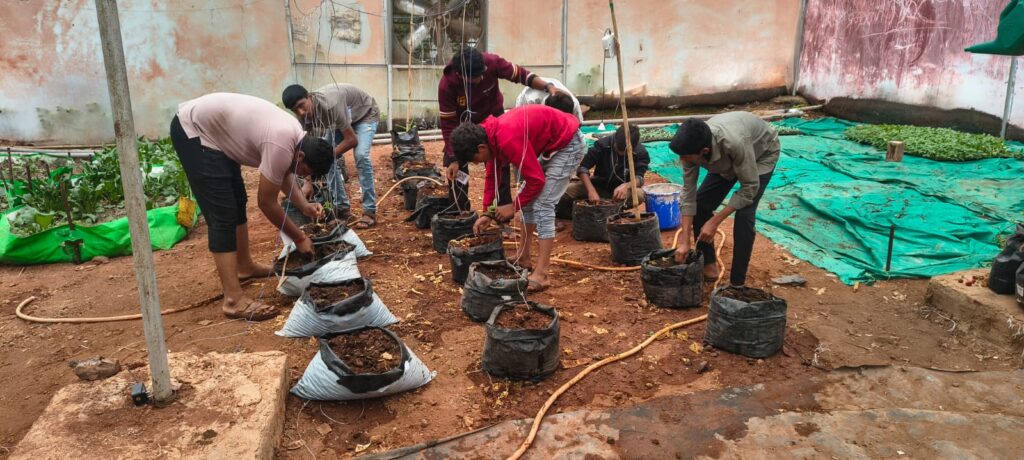
and have learn hydroponic structure and have balanced the structure